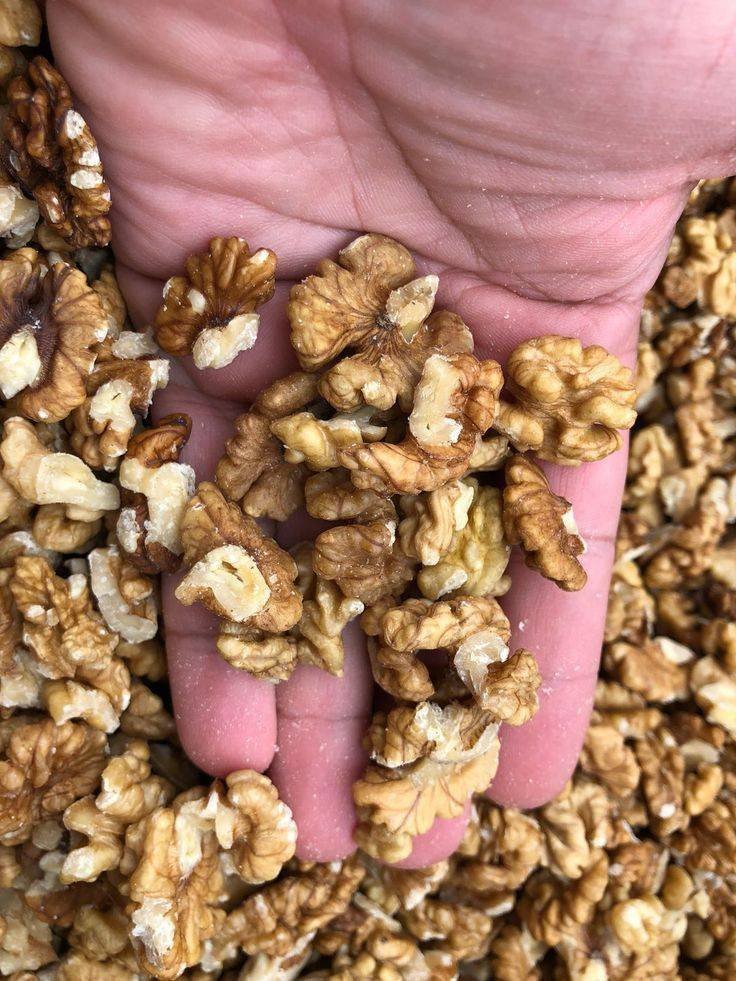
Here’s a detailed overview of walnuts—their uses, nutrition, and tips for cooking:
What Are Walnuts?
- Walnuts are edible seeds from the walnut tree, usually the English walnut (Juglans regia).
- They have a hard shell and a brain-like appearance inside.
Nutritional Benefits
- Rich in omega-3 fatty acids (good for heart health).
- High in protein and fiber.
- Contain antioxidants, vitamins, and minerals such as magnesium, phosphorus, and vitamin E.
- May support brain health and reduce inflammation.
Culinary Uses
- Baking & Desserts: Brownies, cookies, cakes, and muffins.
- Salads: Toasted walnuts add crunch and flavor.
- Savory Dishes: Pesto, stuffing, grain bowls, roasted vegetables.
- Snacking: Raw or roasted, sometimes salted or candied.
Tips for Cooking & Storage
- Toasting: Enhances flavor. Spread on a baking sheet at 350°F (175°C) for 5–10 minutes.
- Chopping: Chop right before use to preserve oils and prevent rancidity.
- Storage: Keep in an airtight container in the fridge or freezer; walnuts can go rancid at room temperature.
💡 Fun Fact: Walnuts are one of the few nuts high in polyunsaturated fats, especially ALA (plant-based omega-3).
If you want, I can also give a simple Southern-style recipe using walnuts, like a candied walnut topping for butter beans, casseroles, or salads. Do you want me to do that?
