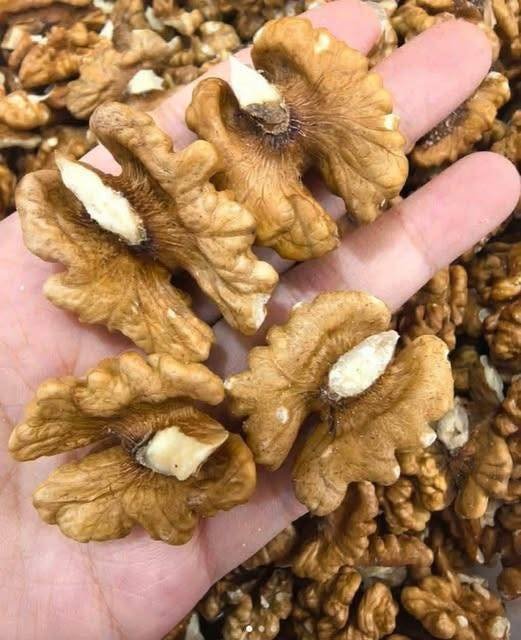
🌰 Walnut
Walnuts are edible seeds from trees of the genus Juglans, valued for their rich flavor, crunchy texture, and high nutritional content. They are commonly eaten raw, roasted, or used in baking and cooking.
🌱 Basic Facts
- Scientific name: Juglans regia (English/Walnut tree)
- Type: Tree nut
- Origin: Native to Central Asia and the Middle East, now grown worldwide
- Shell: Hard outer shell surrounding a wrinkled, edible kernel
🥗 Nutrition (per 28 g / 1 oz)
- Calories: ~185
- Protein: ~4 g
- Fat: ~18 g (mostly healthy unsaturated fats)
- Carbohydrates: ~4 g
- Fiber: ~2 g
- Rich in Vitamin E, Magnesium, and Omega-3 fatty acids
🌟 Uses
- Raw snack: Eaten alone or mixed in trail mixes
- Baking: In cakes, cookies, and pies (like Walnut pie)
- Cooking: Added to salads, pastas, or grain dishes
- Walnut oil: Extracted for dressings and cooking
🧠 Health Benefits
- Supports heart health due to omega-3 fatty acids
- May improve brain function and memory
- Rich in antioxidants to fight oxidative stress
🌍 Global Production
Top producers include:
- China
- United States (California)
- Iran
- Turkey
✅ Fun fact: Walnuts are sometimes called the “brain nut” because the shape of the kernel resembles a brain.
I can also provide:
- Tips for storing walnuts to prevent rancidity
- A guide to using walnuts in sweet and savory recipes
- How to roast and flavor walnuts at home
